Loading page…
 Cash DrawerSecure Cash Drawers Built for Your POS System Enhance your checkout setup with our rugged, steel cash drawer — designed to meet the demands of retail, hospitality, and service environments. Compatible with major POS systems, it offers smooth operation, reliable locking, and easy integration to streamline your…
 TP-Link RouterTP-Link Router — available from MTech Distributors.
 SIM Card Wireless ServicesPrices listed are a monthly subscription. If data usage exceeds the plan limit, a charge of $1.00 will apply for each additional 100 megabytes used. * Requires contractual agreement and payment authorization for service usage*
 MTech 6500 Series5 Port Router Peak Data Speeds: DL 300 Mbps UL 50 Mbps
 MTech 6200 SeriesPEAK LTE-A DATA SPEED 300 MPS DL 50 MBPS UL
 MTech 5419 RouterPEAK LTE-A DATA 3.4 GPS DOWNLOAD 500MPS UPLOAD ** INQUIRE FOR SUBSCRIPTION DETAILS**
 MTech 4200 SeriesPEAK LTE DATA SPEEDS 150 MBPS DL 50 MBPS UL
 DPL WIRELESS MODEMThe Hercules is a 4G LTE CAT-1, single SIM modem ideal for low data usage applications such as ATMs, vending machines, and wireless laundry facilities. Its performance in fringe areas has earned it a reputation for being the most reliable modem on the market. In a recent head to head field trial the Hercules performed…
 ANTENNA FOR WIRELESS UNITSDual Band WiFi: 2.4GHz (2400 - 2485 MHz),5GHz/5.8GHz (5150 - 5850 MHz); Gain: 9dBi; Direction: Omni-directional; Feature: Magnetic Base Mounting; Cable: 3m / 10 feet RG174 Coaxial Cable; Antenna Connector: SMA Male Connector; Package: 1 x WiFi Antenna; Compatible with: WiFi IP Security Camera; Wireless Video…
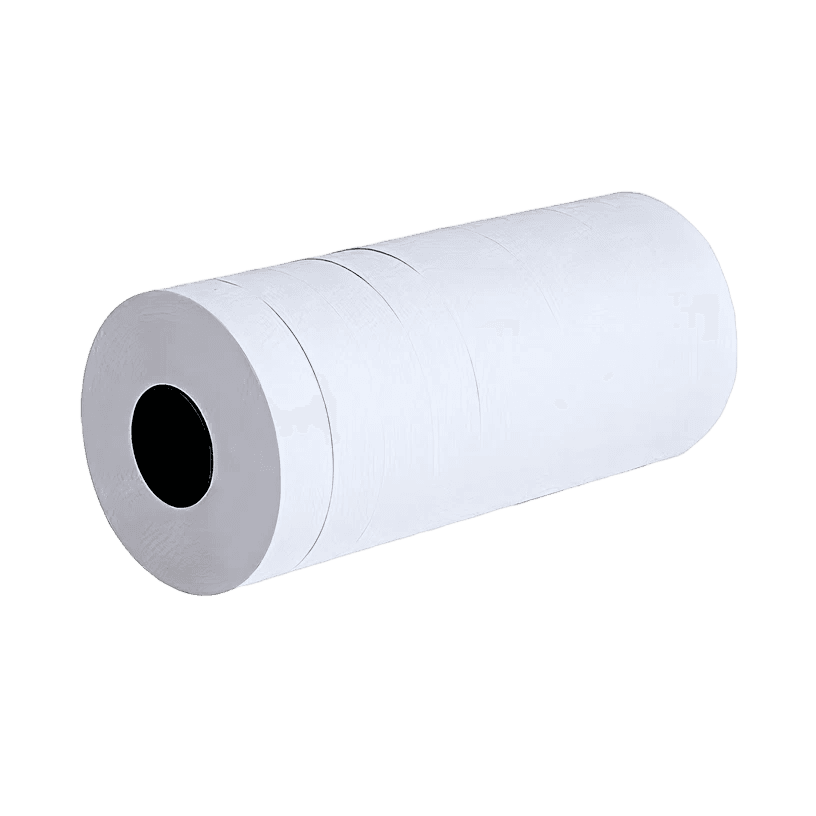
 Receipt Printer Thermal Paper 50 Rolls Size 3 1/8" x 230' (POS)For POS system, Printer Receipt Size 3 1/8" x 230'
 Impact Kitchen Printer Paper 1 Ply 3" x 230' Box 50 RollsImpact paper for kitchen printers. Widely used for the TSP742 printer.
 Card Terminal Thermal Paper BoxTerminals Compatibility, Valor, Ingenico, Pax, Dejavoo Size: 2 1/4" X 50' 50 Rolls per box
 ATM RECEIPT PAPER (8 Rolls)8 ROLL CASE OF HYOSUNG RECEIPT PAPER MODELS: . HALO II , MX2800SE, MX2800T, MX5200SE, MX5100T, MX5000CE, MX7000T, NH1800SE, NH1800, NH2700T, NH5050, MX5000SE, NH2700CE, MX5300XP, NH1800CE, NH1500, MX5300CE, NH2600, NH2600S, NH1000, NH2000, NH2100T, NH9030, MX5100, MX7000D
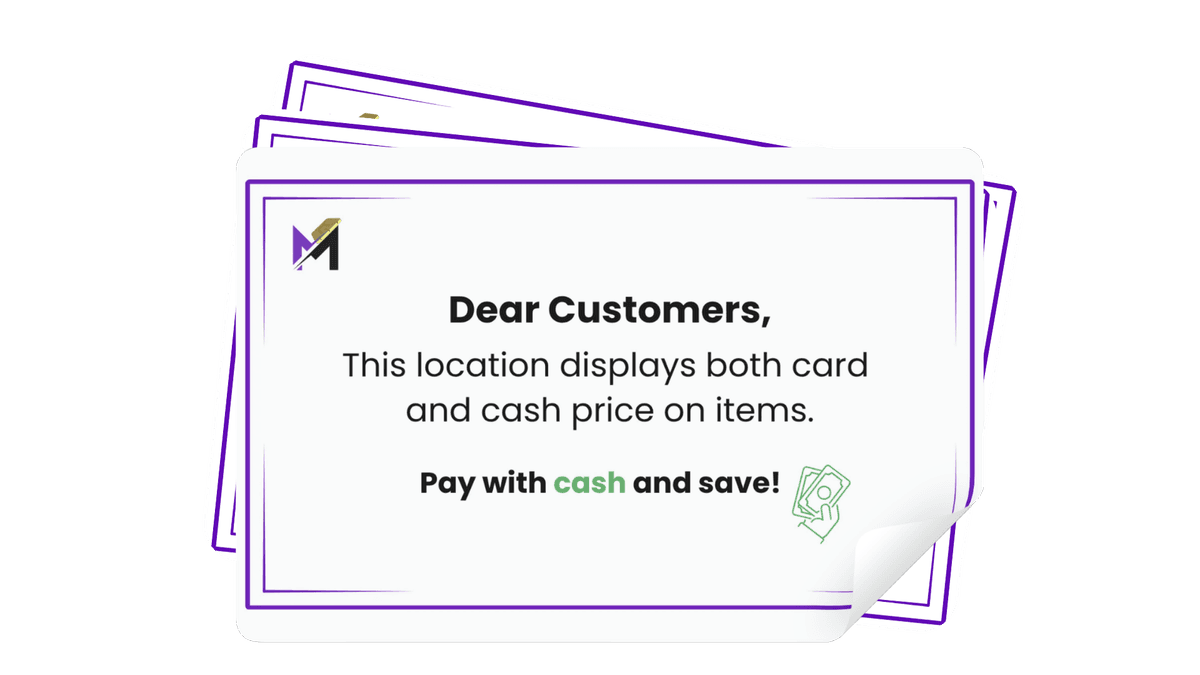
 PRICE GUN LABELSFOR DUAL PRICING LABEL GUN
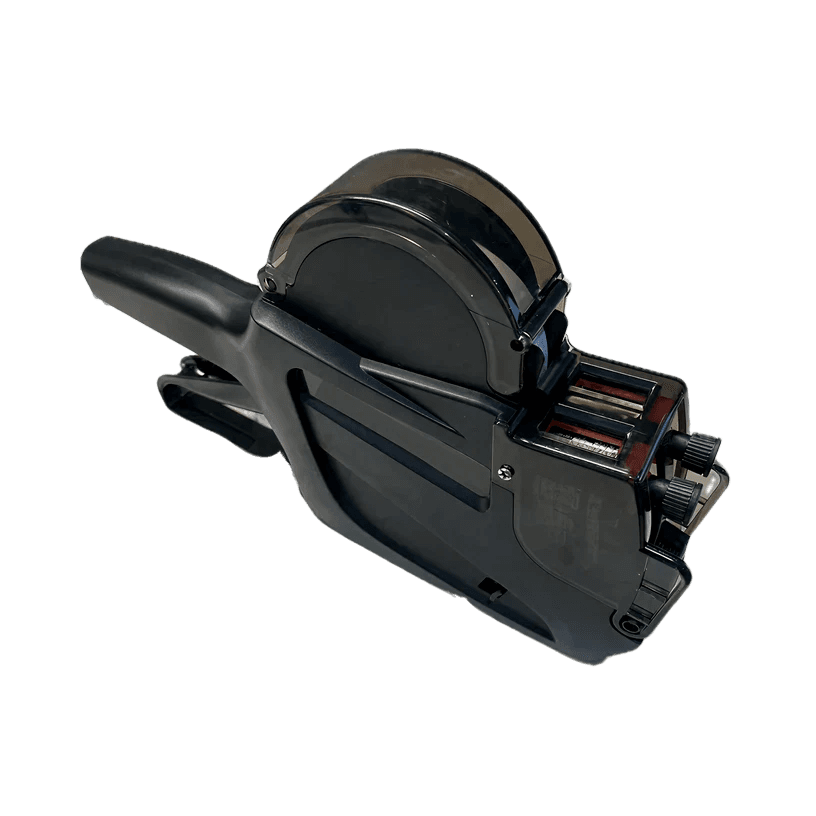
 MTECH MX-6602 DUAL PRICE LABELLER BLACKDual Price Labeller You can enter Cash and Card price!
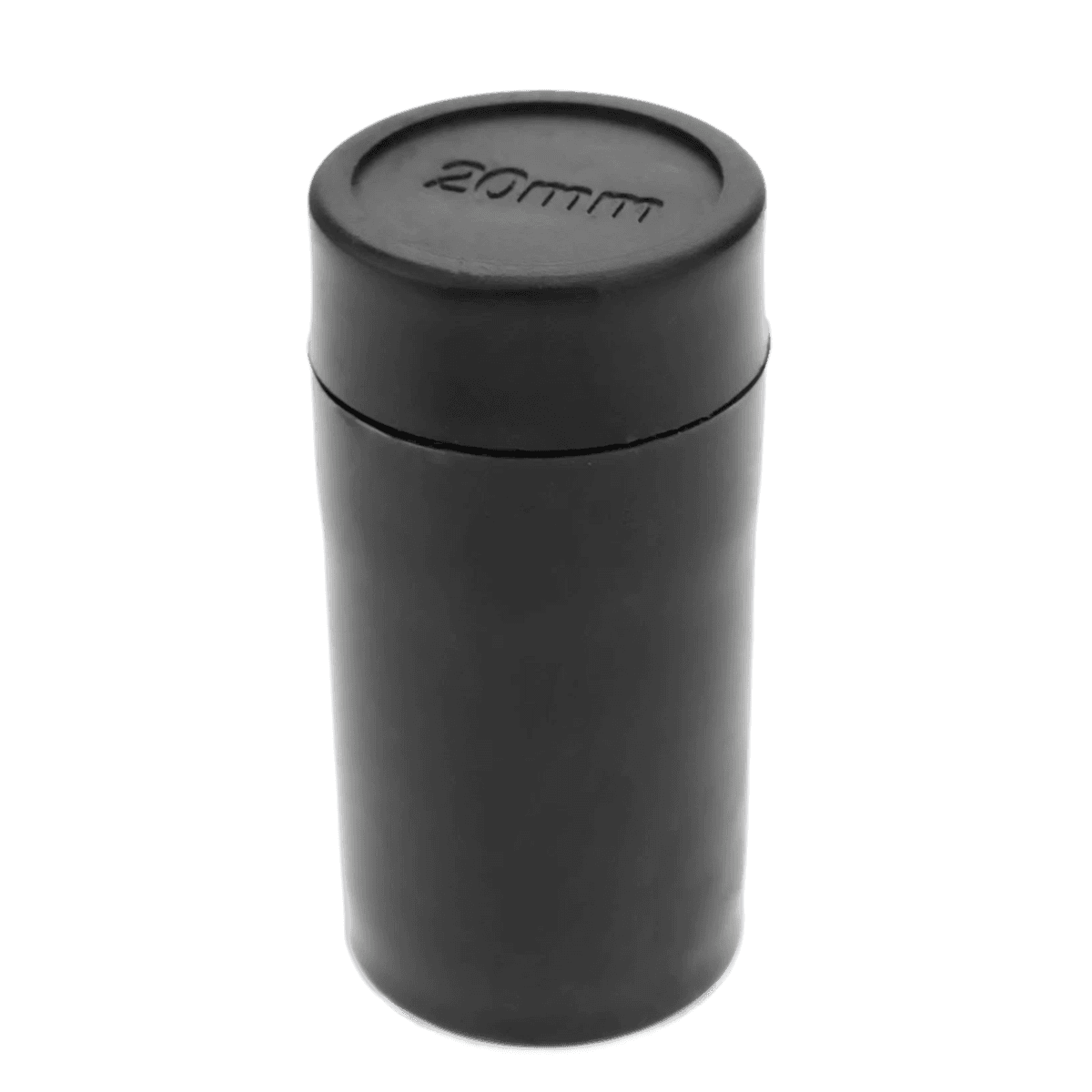
 Ink Rolls for Dual Pricing GunInk Rolls for Dual Pricing Gun (see picture for reference) 1 Roll $5.00 1 Box (50 Units) $69.99
 DUAL PRICE KIT BUNDLE1 DUAL PRICE LABELLER 1 BOX OF INK ROLLS (50 UNIT) 1 BOX OF PRICETAGS (50 ROLLS)
 Valor Universal StandComes with square-metal plate for extra durability and security.
 Stand for Pax S300 & A35Stand for Pax S300 & A35 — available from MTech Distributors.
 ONYX WALL MOUNTIntroducing the all new Onyx-W ATM. The Onyx-W can be installed securely as a Wall Mount or on a Counter Top. You're installation options are only limited by your imagination. Featuring a high-resolution 10.1" LED screen and light-up touch function keys along with 2" receipt printer, the Onyx-W uses the same modules…
 NEW REVISION STANDARD TOPPER WITH FLAT BASENEW REVISION STANDARD TOPPER WITH FLAT BASE Size 19x17x7 (When Using On Rev 10 or Lower NH1800SE Requires Rev 10 Topper Bracket - Rev 11 or Higher NH1800SE Requires Rev 11 Topper Bracket...ATM Rev Found On ATM Serial Number Sticker) (When Using On HALO II Requires Topper Bracket Kit) PART NUMBER S5770000001
 Nautilus Hyosung ATM Topper Bracket Angled Top NH2600 Halo IINautilus Hyosung ATM Topper Bracket Angled Top NH2600 Halo II, 2700. Force
 Stand Dejavoo Z8-Z11 TerminalsStand Dejavoo Z8-Z11 Terminals — available from MTech Distributors.
 Zebra MP-7001Zebra MP7000 SCANNER SCALE Description: The MP-7001 is a self-weighing scale with scan function Dimensions: Long scanner and scanner/scale: 20 in. L x 11.5 in. W x 4.00 in. D x 5.00 in. H 506 mm L x 292 mm W x 102 mm D x 128 mm H Weight: Long scanner: 14.6 lb/6.6 kg Long scanner/scale: 17.6 lb/8.0 kg User Environment:…
 Tor-Rey W-label 40LTor-Rey Scale with Label Printer – Designed for items sold by weight, such as deli products. This scale calculates price per pound and generates scannable labels for quick and accurate checkout.
 Supersonic Zebra Price CheckerPrice Checker Scanner! Experience seamless access to product pricing throughout your visit, streamlining your checkout process and eliminating lines at the register. Upgrade your customer experience today!
 Supersonic PrinterTHERMMAL TCP/IP PRINTER V2
 SuperSonic POS Scanner-Retail Wired GunSuperSonic POS Scanner-Retail Wired Gun — available from MTech Distributors.
 SuperSonic Pole DisplayExternal Pole Display – A customer-facing screen that mirrors the content shown on the SSPOS.
 Supersonic POE SwitchSupersonic POE Switch — available from MTech Distributors.
 Supersonic Mach Mini BundleMach Mini Bundle – The Complete POS Solution The Mach Mini Bundle is an all-in-one, portable point-of-sale (POS) solution built for speed, efficiency, and seamless transactions. Designed for businesses that need a compact yet powerful system, it provides everything required to run a fully functional POS setup right…
 Supersonic KioskSupersonic Kiosk — available from MTech Distributors.
 Supersonic Dual Display ScreenDual Display (CFD + Main) (bundled items not included, screen display only)
 Supersonic Connect Box (Mini Pc)For Supersonic Loss Prevention, camera System
 Supersonic Barcode ScannerSupersonic Barcode Scanner — available from MTech Distributors.
 Star Printer TSP143 EthernetStar TSP143 Ethernet thermal printer, Auto cutter, Grey, PS and Cable Included
 Star Kitchen Printer SP742Star Micronics SP742ME Impact Printer w/ AC,Gray,Ethernet,Internal PS
 Petro Outlet Bluetooth Scanner-2DPetro Outlet Bluetooth Scanner-2D — available from MTech Distributors.
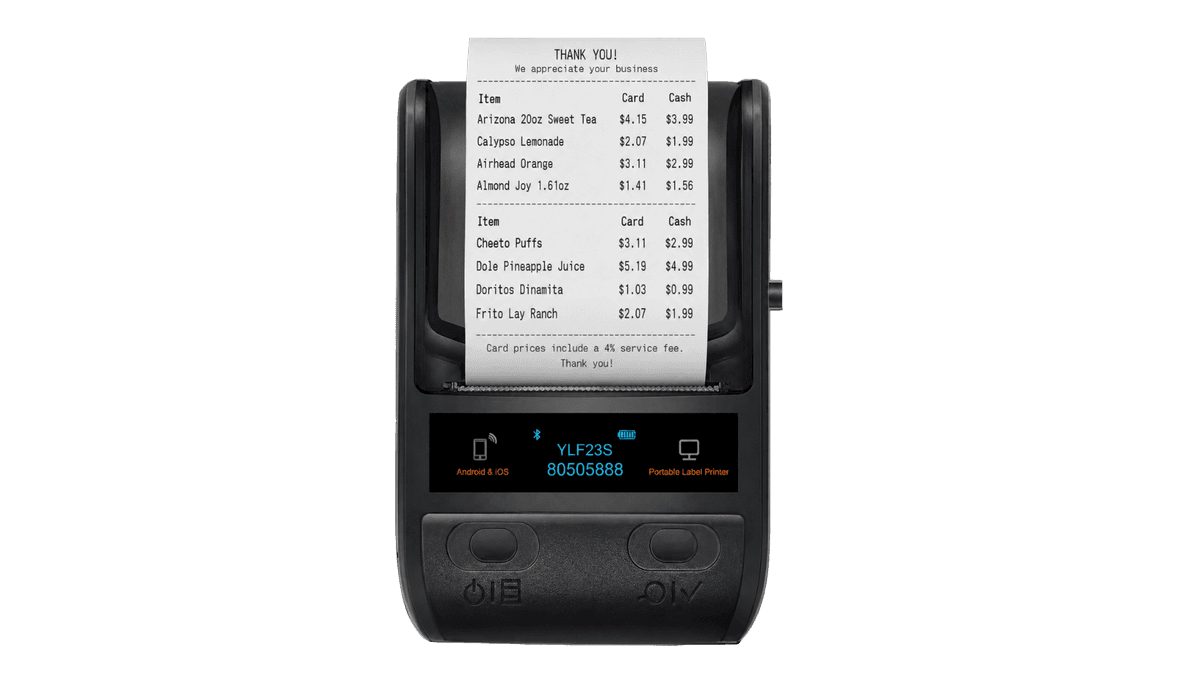
 Portable Thermal PrinterEfficient Management: Quickly print labels with dual prices, ensuring clarity and accuracy. Customizable Labels: Tailor labels to suit your business needs, whether for shelf prices or individual products. Versatile: Suitable for various business sizes, enhancing operational efficiency.
 Kitchen Display (KDS)A kitchen display is a digital screen or monitor typically used in commercial kitchens to efficiently manage and display food orders from customers. It replaces traditional paper tickets and allows kitchen staff to see orders in real-time, prioritize tasks, and streamline the cooking process for a more organized and…
 REFURBISHED HYOSUNG EPP PCI 3.0 8000K KEYPADREFURBISHED HYOSUNG EPP PCI 3.0 8000K KEYPAD MODELS 1800SE, 2700, 2700T, HALO, HALO II, FORCE & MORE
 GENMEGA Power Supply ASSY-HT PSU1700GENMEGA Power Supply ASSY-HT PSU1700 — available from MTech Distributors.
 Hantle/Tranax/Genmega ACU 6 Mainboard W/ ModemThe Hantle, Tranax, Genmega ACU 6 Mainboard with modem will replace the ACU I,3 and 5 mainboards and make your machine EMV compatible. This mainboard is compatible with Hantle/Tranax c4000, t4000 and 1700W ATM machines.
 EMV CARD READER CABLE FOR HALOEMV CARD READER CABLE FOR HALO
 EMV CARD READER HYOSUNG HALO/ HALO IIEMV CARD READER UPGRADE KIT FOR A HYOSUNG HALO/ HALO II, INCLUDES EMV CARD READER, PLASTIC COVER AND CABLE ( BEZEL NOT INCLUDED)
 HYOSUNG 1K CDU REJECT GATE SOLENOIDHYOSUNG 1K CDU REJECT GATE SOLENOID Compatible with: NH 1800SE , MX 5000SE , NH 2700CE , MX 5200SE , HALO , HALO II , MX 2800SE , HALO S PART NUMBER - S7310000686
 Hyosung 1K New Style CDU Side CoverHyosung 1K New Style CDU Side Cover Part Number S4310000240
 Battery Back Up (Power Supply)Battery Back Up (Power Supply) — available from MTech Distributors.
 Hyosung 1K, 2K and Above CDU Controller BoardHyosung 1K, 2K and Above CDU Controller Board for 1800CE, 5000CE, 2100T & More Works in 1K / 2K / 4K / 6K / and 8K note dispensers Compatible With: MX 5000CE (Grey) , NH 1800 , MX 5300XP , NH 1800CE , NH 1500 , MX5300CE , NH 2100T , MX 5100 Reference Numbers : S7670000014, S7670000033, S7670000016, & S7670000036…
 HYOSUNG 2K CDU BOARDHyosung 2K and Above CDU Controller Board Compatible With: NH 1800SE , NH 2700T , MX 5000SE , NH 2700CE , MX 5200SE , HALO , HALO II , MX 2800SE (FORCE) , HALO S , MX 5200 Part Number: S7760000140
 HYOSUNG 5600 HCDU CASSETTE G REJECT MAIN FEED ROLLERHYOSUNG 5600 HCDU CASSETTE G REJECT MAIN FEED ROLLER — available from MTech Distributors.
 HYOSUNG BELT DRIVEN DISPENSER MAIN MOTORHYOSUNG BELT DRIVEN DISPENSER MAIN MOTOR Fits - 1K, 2K, 4K, 6K, 8K CDUs Compatible with: MX 5000CE (Grey) , MX 7000T , NH 1800SE , NH 1800 , NH 2700T , MX 5000CE (Blue) , MX 5000SE , NH 1800POS , NH 2700CE , MX 5300XP , NH 1800CE , NH 1500 , MX 5100T , MX5300CE , MX 5200SE , HALO , HALO II , MX 2800SE , HALO S , NH…
 HYOSUNG BEZEL FOR EMV CARD READERHYOSUNG BEZEL FOR EMV CARD READER NH1800SE/CE PART NUMBER - S4370001733
 HYOSUNG CASSETTE KEYUNIVERSAL HYOSUNG CASSETTE KEY
 HYOSUNG CORTEX MAINBOARD FOR HALO II, 2800SE(FORCE), NH 2700CE, NH 1800SE, & MOREREPAIRED HYOSUNG CORTEX MAINBOARD FOR HALO II, 2800SE(FORCE), NH 2700CE, NH 1800SE, & MORE Part Number R41050-1
 HYOSUNG DOOR KEYUNIVERSAL HYOSUNG BEZEL DOOR KEY
 HYOSUNG EMV CARD READER CABLE FOR CE MODELSHYOSUNG EMV CARD READER CABLE FOR CE MODELS
 HYOSUNG EPP PCI 3.0 8000R KEYPADHYOSUNG EPP PCI 3.0 8000R KEYPAD MODELS 1800SE, 2700, 2700T, HALO, HALO II, FORCE AND MORE
 HYOSUNG GUIDE NOTE FOR CDUHYOSUNG GUIDE NOTE FOR CDU COMPATIBLE WITH - NH1520, NH1530, NH1800XP, NH2200, NH2500, NH2700R, MX2800CE, MX2900, MX700DS, 2800, 5100, 7000T, 7000DR, 7000DR, 7100T, MX9000 PART NUMBER - S4100000086
 Hyosung Halo II Rubber Function PadHyosung Halo II Rubber Function Pad Part Number S4960000344
 Hyosung HALO II Vault Bezel DoorHyosung Halo II Vault Door Bezel Does NOT Include Lock Part Number S4370002538
 HYOSUNG INVERTER BOARDLCD ASSEMBLY, I F BOARD (INVERTER BOARD) 1800SE, MX 4000W (Only Compatible With I/O Board P/N S7650000165 And Newest Revision LCD Display Panel) Models : NH 1800SE , MX 4000W PART NUMBER - S5611000287
 HYOSUNG KEYPAD 8000R REPAIRShipping Weight: 3lbs Manufactured by: Nautilus Hyosung
 HYOSUNG NEW REVISION MAIN BOARDHyosung Mainboard For Halo II, 2800SE, 2700CE, 1500SE & More Compatible with: Models - HALO II , MX2800SE, MX2800T, MX4000W, MX5200SE, MX5300SE, NH1800SE, NH2700T, MX5000SE, NH2700CE, NH1500, NH2600, NH2600S Manufacturer Part Number: S7650000167
 HYOSUNG OLD REVISION I/O BOARDOLD REVISION IO BOARD HYOSUNG NH 1800SE, MX 4000W, MX 5200SE, HALO, HALO II, HALO S Part Number - S7650000111
 HYOSUNG PCI 3.0 MOUNTING BRACKETHYOSUNG PCI 3.0 8000R & PCI 5.0 X1 EPP MOUNTING BRACKET FOR 2700CE/2700T
 Hyosung PCI 3.0/8000R & PCI 5.0/X1 Power and I/F Adapter CableHyosung PCI 3.0/8000R & PCI 5.0/X1 Power and I/F Adapter Cable This cable is required to upgrade to an 8000R or X1 keypad. Compatible with: MX 5000CE (Grey) , MX 5200T , MX 7000T , NH 1800SE , NH 2700T , MX 4000W , MX 5000SE , NH 2700CE , MX 5300XP , NH 1800CE , NH 1500 , MX 5100T , MX5300CE , MX 5200SE , HALO , HALO…
 HYOSUNG POWER SUPPLY REFURBISHEDREFURBISHED HYOSUNG POWER SUPPLY MODELS: MX 5000CE (Grey), NH 1800SE, NH 1800, NH 2700T, MX 4000W, MX 5000SE, NH 1800POS, NH 2700CE, NH 1800CE, MX5300CE, MX 5200SE, HALO, HALO II, MX 2800SE, HALO S
 HYOSUNG RECEIPT PRINTERHYOSUNG RECEIPT PRINTER Compatible with: HALO II, MX 5000CE (Grey), NH 1800SE, NH1800, NH1800CE, NH1500, MX5300CE
 HYOSUNG ROLLER SHAFT ASSEMBLY WITH DELIVERY GUIDEHyosung Roller Shaft Assembly With Delivery Guide Models : NH 2700CE, MX 5300XP, NH 1800CE, NH 1500, MX 5100T, MX 5000CE, NH 2200, MX 7000T, NH 1800SE, NH 1800, NH 2700T, NH 5050, MX 5000SE, NH 2500, NH 2100T, MX 5100, MX 7000D, MX 5300CE Part Number: S7310000175
 Hyosung Rubber Note Pick WheelHyosung Rubber Note Pick Wheel Compatible With HALO II , MX2800SE, MX5200SE, MX5100T, MX5600L, MX5600T, MX7600DA, MX7600I, MX7600TA, MX5000CE, MX5200T, MX7000T, NH1800SE, NH1800, NH2700T, NH5050, MX5000SE, MX7100T, NH1800POS, NH2700CE, MX5300XP, NH1800CE, NH1500, MX5300CE, NH2600, NH2600S, NH1000, NH2000, NH2100T,…
 Hyosung Upper Fascia Bezel Unit For Halo IIHyosung Upper Fascia Bezel Unit For Halo II Part Number S4370002531
 Hyosung WinCE 7.0 Integrated Mainboard I/O BoardHyosung WinCE 7.0 Integrated Mainboard I/O Board Replacement Part For I/O Board Part Number S7650000052 Compatible With MX2800SE, MX2800T, NH2700T, MX5000SE, NH2700CE Part Number S7650000317
 HYOUSUNG DOUBLE DETECT ROLLER FOR HYOSUNG 1K DISPENSERSHYOSUNG DOUBLE DETECT ROLLER FOR HYOSUNG 1K DISPENSERS PART NUMBER - S7310000676
 LCD ASSEMBLY, I F BOARD (INVERTER BOARD) 1800SE, MX 4000WLCD ASSEMBLY, I F BOARD (INVERTER BOARD) 1800SE, MX 4000W PART NUMBER - S5611000287
 Nautilus HyosungHalo II Displays (LCD) 10.1" Color LCD PanelNautilus HyosungHalo II Displays (LCD) 10.1" Color LCD Panel
 REFURBISHED HYOSUNG 1K CASSETTEHyosung 1K Note Cassette, Plastic Compatible with: MX 5000CE (Grey) , NH 1800SE , NH 1800 , MX 5000SE , NH 1800POS , NH 2700CE , NH 1800CE , NH 1500 , MX 5200SE , HALO , HALO II (2600SE) , MX 2800SE (Force) , HALO S , NH 1000 , MX 5200
 REFURBISHED HYOSUNG 2K CASSETTEHyosung 2K Note Cassette, Plastic, Refurbished Compatible with: MX 5000CE (Grey) , MX 7000T , NH 1800SE , NH 1800 , NH 2700T , MX 5000CE (Blue) , MX 5000SE , NH 2700CE , MX 5300XP , NH 1800CE , NH 1500 , MX 5100T , MX5300CE , MX 5200SE , HALO , HALO II , MX 2800SE , HALO S , NH 1000 , NH 2000 Series , NH 2100T , MX…
 A SERIES 6128 ELECTRONIC LOCKA one-time code (OTC) lock requiring two forms of authentication, A-Series offers enhanced safe access control and three modes of operation. The lock allows shared access through secure file transfers, eliminating the need for costly and time-consuming vendor meets. Three modes of operation: bank, service,…
 BEZEL WITH ENTIRE LCD ASSEMBLYBEZEL WITH ENTIRE LCD ASSEMBLY WHICH INCLUDES DISPLAY PANEL, I/O BOARD, MAIN BOARD AND FUNCTION KEYS FOR HALO, HALO II PART NUMBER - S7100000147
 ELECTRONIC E-LOCKOur easy-to-use electronic safe locks combine proven functionality with a wide range of options that balance convenience and control. Easy to install or retrofit, The Sargent and Greenleaf Model 6120 electronic safe lock simplifies security upgrades for your safe. Model 6120 is EMP-resistant, and is perfect for…
 REFURBISHED 1K NOTE DISPENSER WITH CDU BOARDREFURBISHED 1K NOTE DISPENSER WITH CDU BOARD Models : NH-1500, NH-1800, NH-1800CE, NH-5000CE, HALO, HALO II
 REFURBISHED 2K NOTE DISPENSER WITH CDU BOARDREFURBISHED 2K NOTE DISPENSER WITH CDU BOARD Models : NH-1500, NH-1800, NH-1800CE, NH-5000CE, HALO, HALO II
 REFURBISHED 4K NOTE DISPENSER WITH CDU BOARDREFURBISHED 4K NOTE DISPENSER WITH CDU BOARD Models : NH-1500, NH-1800, NH-1800CE, NH-5000CE, HALO, HALO II
 REVERSE ROLLER FOR 1K, 2K, 3K CASSETTE NOTE SEPARATORREVERSE ROLLER FOR 1K, 2K, 3K CASSETTE NOTE SEPARATOR, DOUBLE TAPER, NEW STYLE Compatible with: Hyosung/Tranax 1K, 2K, 3K Cassettes
 Figure KioskQUICK SERVICE RESTAURANT SOLUTION ENCLOSURE INCLUDED
 mG-S1501 Precision POS ScaleKey Features Legal for Trade, NTEP Certified Measures Substances up to 1500g Multiple Interfaces (Bluetooth, Serial, USB) Wired & Battery Operated Power Supply Class II Accuracy for the Cannabis Industry Support for Windows, Android, iOS
 mG-T30 POS ScaleKey Features Legal for Trade in U.S. & Canada Easy Setup & Integration Support for Windows, Android & iOS Serial, Bluetooth & USB-C Connectivity (mG-TUDB models only) Class III Accuracy 13.5” x 10.4” Platter Size Optional Pole Display Accessory (mG-TUDB models only) Max Weight 60 lbs./ 30 kgs
 Camera to POS Integration BundleUpgrade Your System with Our Camera-to-POS Integration Bundle! Experience effortless connectivity with our Integrated Security Camera and 5-Port PoE+ Switch — designed for a seamless, plug-and-play setup. No computer? No worries! The Petro Outlet Mini PC/Connect Box easily connects all your devices. Already have a PC?…
 Card Reader CleanerCard Reader Cleaner For ATM Card Readers & Credit Card terminal
 Dejavoo P1 Desktop AndroidThe Dejavoo P1 brings the power and flexibility of the Android OS to a sleek desktop payment terminal. It features a large 5-inch HD touchscreen that provides a user-friendly, app-like experience for both merchants and customers. With its powerful processor, the P1 ensures transactions are fast and secure, keeping…
 GENMEGA CDU BELT S3M-699 FOR SCDUGENMEGA CDU BELT S3M-699 FOR SCDU — available from MTech Distributors.
 GENMEGA DOOR KEYGENMEGA BEZEL DOOR KEY
 GENMEGA DRIVE BELT MCDU/HCDU CASSETTE TO REJECT S3M-303GENMEGA DRIVE BELT MCDU/HCDU CASSETTE TO REJECT S3M-303 — available from MTech Distributors.
 GENMEGA EPP KEYPAD REPAIRVERSIONS B1,B2,B3
 GENMEGA FRONT BEZEL FOR 1700GENMEGA FRONT BEZEL FOR 1700 PLASTIC BEZEL ONLY; NO ATTACHMENT INCLUDED Part Number 120104441
 Genmega G2500 Control Board for Left or Right Function KeysGenmega G2500 Control Board for Left or Right Function Keys
 Genmega G2500 Left or Right Function Key Membrane CapGenmega G2500 Left or Right Function Key Membrane Cap Model: GMKPD-03011
 Genmega Keypad Mounting Bracket for EPP B1/B2, G2500Genmega Keypad Mounting Bracket for EPP B1/B2, G2500
 GENMEGA POWER SUPPLYREFURBISHED GENMEGA POWER SUPPLY MODELS: 1700, 1700W, G1900 B1, G2500 B1, GT3000, Onyx
 Clover Station Solo Bundle– No Cash DrawerExperience the power of a comprehensive POS in a sleek, space-saving package with the Clover Station Solo Bundle. This setup is perfect for businesses that have moved away from heavy cash transactions, offering the all-in-one Clover Station Solo without the bulk of a cash drawer. Manage sales, inventory, and customer…
 Clover Station SoloThe Clover Station Solo is a powerful and versatile all-in-one point-of-sale system designed to be the central hub for businesses of all sizes. Featuring a single, large touchscreen, it simplifies every aspect of your operations, from taking orders and processing all payment types to managing inventory and customer…
 Clover Station Duo LTE – No Cash DrawerThis Clover Station Duo LTE Bundle offers a complete, modern POS solution tailored for businesses that operate in a more digital, cash-free environment. The bundle includes the powerful dual-screen Clover Station Duo, which provides seamless transaction management and customer interaction, all connected via reliable…
 Clover Station Duo LTE - with Cash DrawerThe Clover Station Duo is a premier, all-in-one point-of-sale system designed to manage your entire business with power and elegance. It features a large, high-resolution screen for the merchant and a dedicated, customer-facing display for payment, tipping, and loyalty interactions, creating a smooth and transparent…
 Clover MiniThe Clover Mini packs the full power of a traditional POS system into a compact and stylish device. While small in size, it offers robust functionality, capable of handling everything from swift payment processing to inventory tracking and employee management. Its intuitive touchscreen interface makes it easy to use,…
 Clover Flex WifiUnleash your business from the countertop with the Clover Flex WiFi. This portable, all-in-one POS device is designed for ultimate mobility and convenience, allowing you to take orders, process payments, and manage your business from anywhere in your store or on the go. It features a built-in receipt printer and…
 Figure POSFigure POS brings menu management, order entry, kitchen routing, kiosks, payments, reporting and loyalty-ready workflows into one cloud-based hospitality system. MTech configures the full setup around how your team serves guests.
 Clover POSClover brings countertop checkout, portable payments, compact registers, apps, inventory and customer-friendly checkout into one flexible POS family. MTech helps match the right Clover devices to your business flow.
 SuperSonic POSSuperSonic POS brings fast transactions, inventory control, scanners, scales, reporting and payment acceptance into one dependable retail system. MTech configures the full setup around how your store actually runs.
 GENMEGA CASSETTE, HCDU TYPE, 1ST CST, 2000 NOTESBRAND NEW GENMEGA CASSETTE, HCDU TYPE, 1ST CST, 2000 NOTES Part Number 141139111 COMPATIBLE WITH 1700 1700W C4000 C4000S G1900 G2500 G6000 GT3000 T4000
 GENMEGA CASSETTE KEYGENMEGA KEY TO ACCESS THE CASSETTE
 GENMEGA AND HANTLE 7" Color LCD For 1700W, G1900 & GT3000GENMEGA AND HANTLE 7" Color LCD For 1700W, G1900 & GT3000
 HYOSUNG HALO IIThe HYOSUNG HALO II delivers the best value of any retail cash dispenser in the industry, with enhanced security features and peace of mind at an affordable price.
 HYOSUNG FORCE TTW 4KThe 2800T brings you through-the-wall convenience and the latest advancements in ATM technology. The appealing and weatherized exterior is suitable for even the most high-end locales. This heavyduty machine gives you dependability and ease of maintenance with the added bonus of high-capacity note storage. You get the…
 HYOSUNG FORCE MX 2800SEHyosung is Revolutionizing the Self-Service Industry. Hyosung is dedicated to making technology work for the humans who use it. We provide solutions that simply work better and more intuitively. Every ATM product, service, and support system is engineered to be reliable and flexible. We listen to our customers and…
 HYOSUNG 5200SEAdvantage DESIGNED FOR THE FUTURE The 5200 provides a choice of either an affordable Microsoft® Windows® CE 6.0 processor running Nautilus Hyosung popular retail application software, or for even greater flexibility, a Microsoft® Windows® 7 platform running the retail application or NDC emulation. The Nautilus Hyosung…
 ONYX-P ATM SERIESONYX-P ATM SERIES — available from MTech Distributors.
 GENMEGA ONYX SERIES ATMGenmega introduces the Onyx series ATM. A new, modern, upscale design containing a set of standard features that are sure to impress, the Onyx provides the latest in ATM technology for any market. Whether in a hotel, club or gas station, the Onyx ATM provides the look of a high-end financial ATM to reassure customers…
 GENMEGA NOVAGenmega is proud to announce the new NOVA retail ATM. With a world of new services, new functions, and new revenue generating opportunities, the NOVA stands ready to redefine the retail ATM. With a high definition 17 inch touch screen, the NOVA allows full motion video on the top half of the screen while running the…
 Genmega GT5000 ATM SeriesGenmega introduces the GT5OOO series ATM. A high performance yet economical Through-The-Wall ATM solution with the look and feel of a full bank ATM. Designed for wall or Kiosk installation, the GT5OOO series makes new TTW installation or replacements a snap. : Built with the same compact modular components as -- your…
 Genmega GT3000 ATM SeriesGenmega introduces the GT3000 series through-the-wall ATM. Designed as a true through-the-wall machine, the GT3000 retains all the features and options of a retail floor model ATM in a small, compact weather resistant chassis, perfect for tight spaces, Kiosks or anywhere location space is valuable. The GT3000 uses a…
 G2500P ATM SERIESBuilding on the great reputation of the 2500 series retail ATM, The G2500P model ads a Motorized Presenter module and high-performance cash dispenser to this already popular and reliable platform. The G2500P comes standard with an 8" high-resolution wide-screen LCD, which can be upgraded to a 10.2"touchscreen. The…
 G2500 ATM SERIESGenmega introduces the G2500 series ATM. Designed for retail and off-premise locations, the G2500 comes loaded with all the features you expect, and also provides additional hardware configuration choices allowing you to custom fit each machine to the needs of your customer or location. The G2500 comes standard with…
 C6000 ATM SERIESThe Genmega C6000 ATM includes high-end features including a 15" LCD with function key or 1 S"touch screen LCD and 2K cassette, eye catching modern design and host of hardware options driven by a Microsoft Windows™ CE 6.0 operating environment for maximum flexibility.
 Valor VP550EThe Valor VP550E is a portable Android smart terminal with a large touchscreen, built-in receipt printer and all-day battery — designed for mobile and tableside payment acceptance.
 Valor VP 300PCI-PTS 5.0 Certified PinPad Signature Capture Chip, Swipe and Tap-to-pay capabilities USB and Serial Communication Compatible with the Valor VP100 terminal ONLY
 Valor VP 100Countertop POS Ethernet & Wi-Fi Large Scale Touch Screen Display Signature Capture Chip, Swip and Tap-to-Pay capabilities Compatible withPin Pad: Valor VP300
 Valor VL550The Valor VL550 is a wireless, portable payment terminal with 4G and Wi-Fi connectivity and a built-in printer for taking payments anywhere on the floor.
 Valor VL100/VL110The Valor VL100/VL110 is a reliable, cost-effective countertop terminal for everyday EMV, swipe and tap-to-pay acceptance.
 Valor VL100 ProThe Valor VL100 Pro is a compact, high-performance countertop terminal that combines EMV chip, swipe and contactless acceptance in a small footprint.
 Valor RCKT EMV mPOS ReaderLightweight, Easy-to-Hold Contact/Contactless Swipe, Dip, Tap Credit, Signature/PIN Debit & EBT Acceptance Wireless Bluetooth Communication Plug and Play Long-Lasting Battery PCI-PTS 5.0 Certified
 Pax Aries 8Pax Aries 8 — available from MTech Distributors.
 Pax A35 Pin PadThe A35 is a high-performance, Smart Desktop device, ergonomically designed to address multiple different retail use cases. Based upon PAXBiz powered by Android 10, the A35 is designed to support in-device semi-integration payment applications, or it can be used as a payment input peripheral interfacing to another…
 INGENICO MOBY 5500 CARD READERINGENICO MOBY 5500 CARD READER — available from MTech Distributors.
 Dejavoo Z6 Pin PadZ6 Pin Pad Terminal with Touch Screen EMV 4.x L1 and L2 Certified Ethernet connectivity 32 bits high performance secure Microprocessor, @ 400MHz 3.5” color Touch Screen (TFT-LCD 320×480 pixels) 192 MB of Memory (128 MB RAM / 64 MB DDR RAM) High Security CPU Open Architecture Linux Operating System Model: The Vega 3000…
 Dejavoo Z11EMV and NFC Contactless Built In – EMV 4.x L1 and L2 certified Tri-Comm capability (Dial, IP & WiFi) 3.5” TFT LCD with PCT touch screen for signature on the screen 2.4’’ Color LCD with backlight 192 MB of Memory (128 MB RAM / 64 MB DDR RAM) Model: The Vega 3000 is PCI PTS v4.x Certified Apple Pay, Samsung Pay, Google…
 Dejavoo QD3 mPOS AndroidThe Dejavoo QD3 is a compact and powerful mobile POS (mPOS) Android terminal designed for ultimate portability and performance. Its key features are engineered to keep your business moving forward, with a large 5-inch HD touchscreen for easy operation and a powerful processor for fast transactions. The QD3 is perfect…
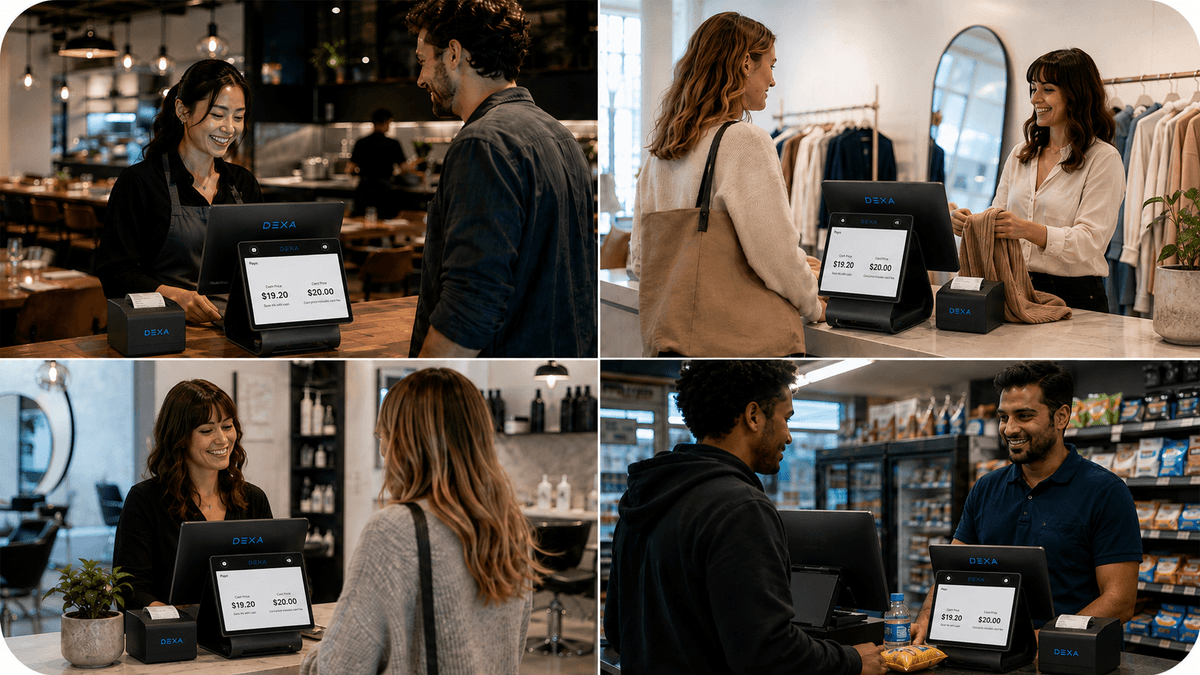
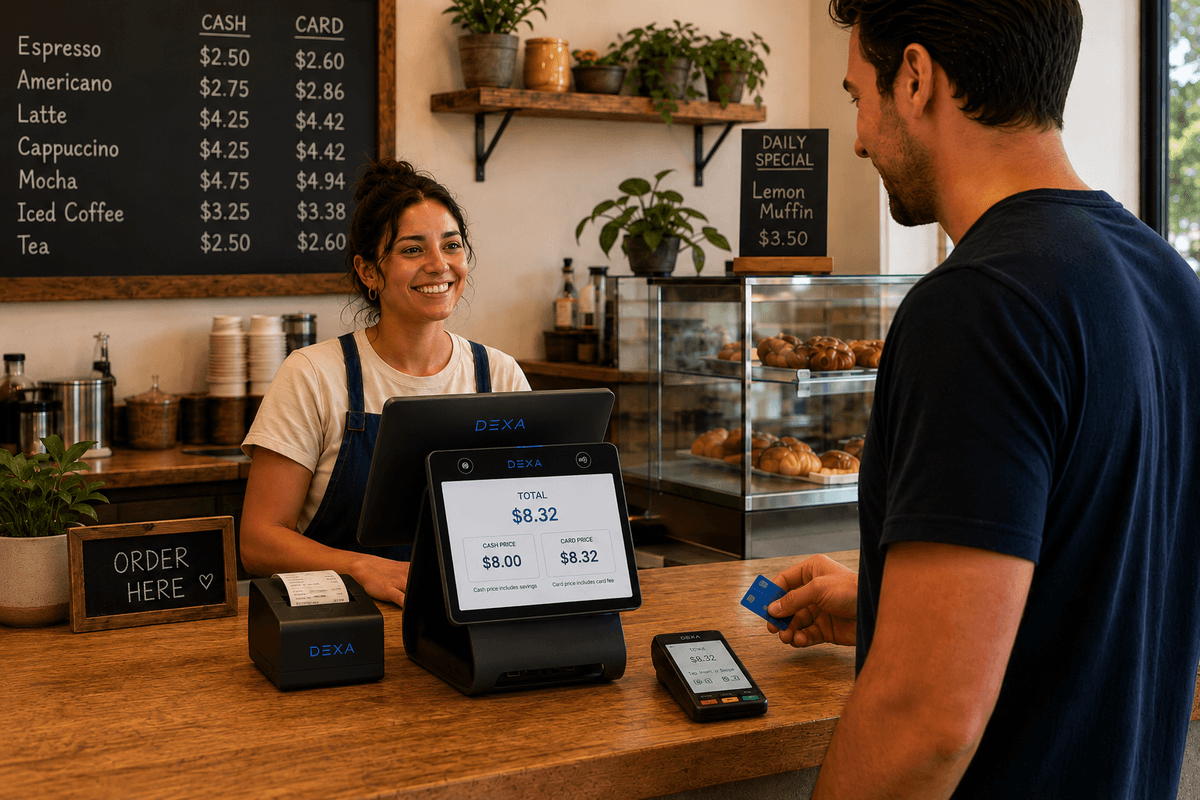
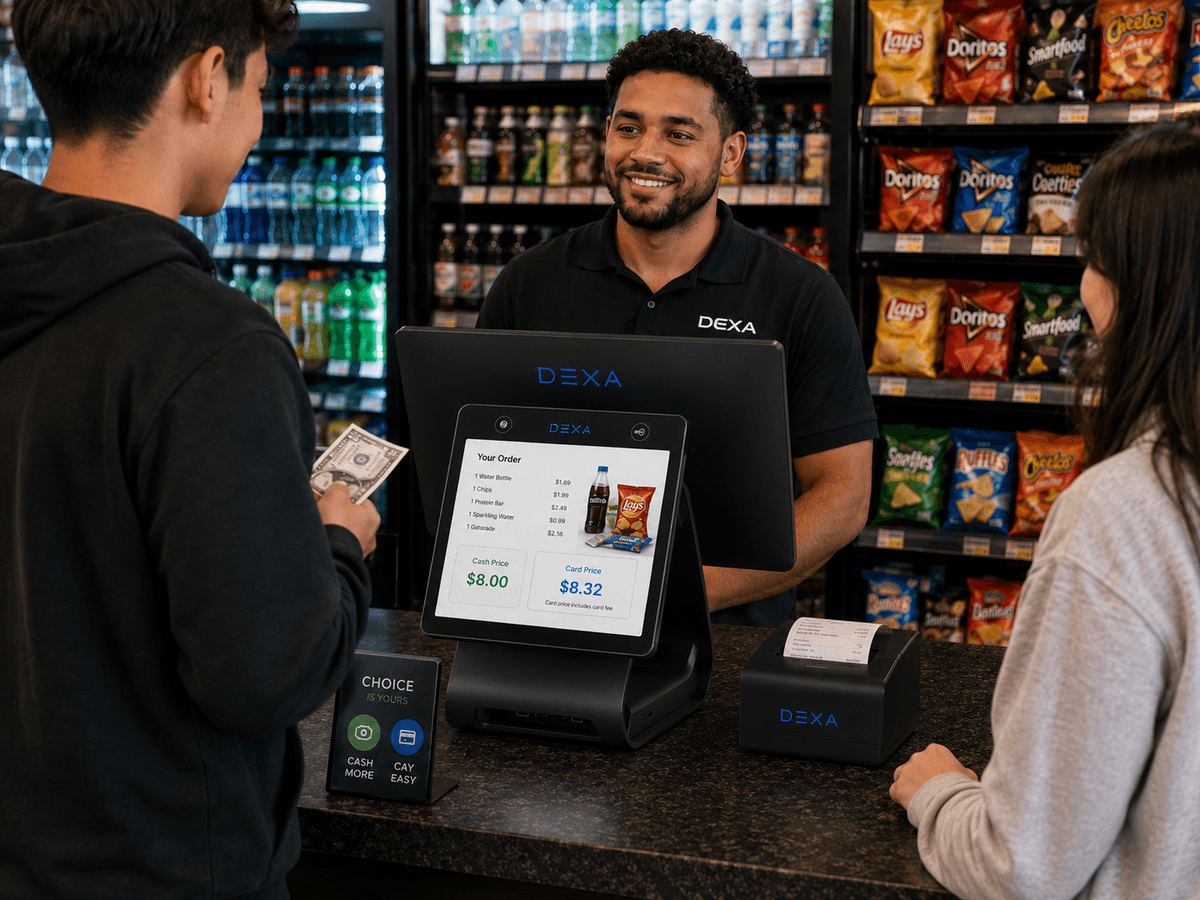
 Dexa POSDexa POS is a restaurant-grade point-of-sale system for busy counters, kitchens and retail teams. MTech configures Dexa with the hardware, payment processing, dual pricing and support your operation needs from day one.
 Dejavoo P5 Handheld/PIN Pad Wireless AndroidThe Dejavoo P5 offers exceptional versatility as both a handheld wireless terminal and a customer-facing PIN pad. Running on a powerful Android platform, it features a large 5-inch HD touchscreen for a smooth and intuitive user experience. This multi-functional device is designed to adapt to your needs, whether you're…
 Dejavoo P3 Handheld Wireless AndroidEmpower your business with the mobility of the Dejavoo P3 Handheld Wireless Android Terminal. This device combines the functionality of a powerful POS system with the convenience of a portable, handheld unit. Its large 5-inch HD touchscreen makes navigating applications and processing payments effortless, while its…
 LANDI C20Pro 8GBThe LANDI C20Pro is an 8GB+128GB Android 13 all-in-one POS with a 15.6" FHD merchant display, a 10.1" customer-facing screen and a built-in 80mm printer — a complete countertop station out of the box.
 LANDI KDS C20The LANDI KDS C20 is an Android 13 kitchen display system with a 15.6" screen and NFC, keeping tickets organized and orders moving in the back of house.
 Pax A30The PAX A30 is a sleek, Android-powered smart multilane PIN pad that elevates the customer checkout experience in busy retail, supermarket and foodservice lanes.
 Dejavoo P17The Dejavoo P17 is a high-security, streamlined Android PIN pad built for fast, reliable payment acceptance in high-volume retail and hospitality environments.
 Valor VL300The Valor VL300 is a secure, customer-facing PIN pad designed to pair with a primary Valor countertop terminal to speed up and simplify checkout.
 Dejavoo QD5The Dejavoo QD5 is a high-end Android PIN pad terminal offered at an affordable price, designed for both multi-lane and stand-alone use in modern retail and service businesses.
 Clover GoThe Clover Go is a compact, lightweight mobile card reader that turns any smartphone or tablet into a full payment terminal — ideal for mobile professionals and on-the-go sales.
 Dejavoo QD4The Dejavoo QD4 is a sleek, Android-based countertop terminal engineered to deliver fast, secure and flexible payment acceptance for retail stores and restaurants.
 Dejavoo P12 Mini POSThe Dejavoo P12 is a pocket-sized Android mPOS and PIN pad terminal that delivers enterprise-grade payment processing power in the palm of your hand.
 Ingenico Lane 3000The Ingenico Lane 3000 is a compact, customer-facing payment terminal designed for fast, secure in-store transactions in high-volume retail and hospitality.
 Valor VP550The Valor VP550 is a feature-rich, portable Android 12 POS terminal designed for businesses that value mobility, versatility and enhanced customer engagement.
 Valor VP800The Valor VP800 is a premium Android smart POS terminal with a large HD touchscreen, built-in printer and optional dual-screen setup — built for high-volume retail and hospitality checkout.
 Dejavoo P8Dejavoo’s P8 is a powerful Android 11.0 wireless payment terminal designed for fast, secure transactions across retail, restaurant, mobile, and service environments. It supports SIM and WiFi connectivity, tap to pay, and SPIN integration, making it one of our most versatile and trusted terminals for flexible, reliable…